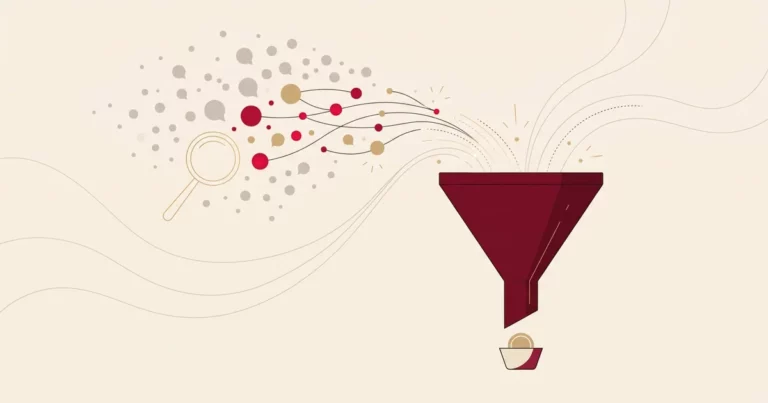
History of the adult industry: how the internet changed everything
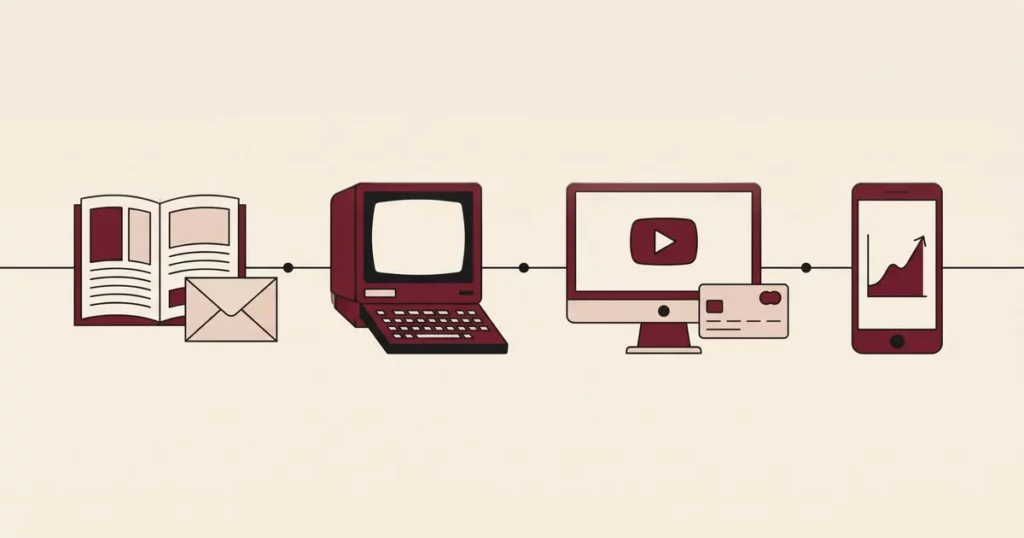
The history of the adult industry is the story of a sector that has always adopted new channels before everyone else. Mail order, Minitel, the video cassette, then the web, online payment, affiliation and live streaming: at each stage, publishers and producers tested, measured and made the channel pay before it became standard practice. Today almost every adult service runs through the internet. This article traces that journey, with market figures and the way each job has changed.
Key facts
| Topic | The history of the adult industry, before and after the internet |
| Before the internet | Magazines, mail order, sex shops, cinemas, cassettes, Minitel and premium-rate phone lines |
| The turning point | Mid-1990s: online video, card payments, subscriptions, affiliation |
| Online market, worldwide | Between 44 and 82 billion US dollars in 2025, depending on the study |
| Europe’s share | Around 30% of the online market |
| Jobs | From publisher and distributor to SEO specialist, media buyer and creator |
| Today | Every business model in the sector depends on online traffic |
Before the internet: how publishers and producers worked
Before the web, the sector sold physical media through closed, expensive channels. Each trade had its own route to market.
- Magazine publishers lived on newsstand sales, postal subscriptions and classified ads.
- Mail order was the first discreet channel. In Germany, Beate Uhse founded her mail-order company in 1951, then opened in Flensburg in 1962 what is regarded as the world’s first sex shop (history of the Beate Uhse group). A catalogue sent to the home already looked like an online store: wide choice, remote ordering, discreet delivery.
- Film producers relied on specialist cinemas, then on the video cassette from the late 1970s. The cassette brought content into the home and created the rental market. How much the sector weighed in the victory of VHS is still debated by historians (videotape format war), but it was among the first suppliers of catalogues.
- Sex shops handled retail, with a catchment area limited to a neighbourhood.
What they had in common: distribution was costly, audiences were local or national, and little was measured. You knew a print run or a number of cassettes sold, rarely the customer.
Minitel and phone lines: the dress rehearsal
France went through a first digital revolution before the web. With Minitel, adult chat services invented, as early as the 1980s, a service billed by the minute with part of the revenue paid back to the publisher. At its peak, Minitel was installed in about nine million homes and businesses and generated around one billion euros in revenue across all services (Encyclopædia Universalis, in French).
Adult phone lines follow the same logic with premium-rate numbers: a call, a duration, a payout. Publishers learned there what would become their strength online: buying advertising, counting connections, working out a cost per call and reallocating budget according to return. The model still exists, and it is now run with web tools, as our case study on media buying for an adult phone line shows.
The web arrives: a pioneer of digital techniques
From the mid-1990s, adult publishers and producers moved to the web faster than most industries. Several techniques that are now routine found their first large-scale commercial uses there (The Next Web):
- Online video. As early as 1994, a Dutch company in the sector built a system for streaming video over the internet. Demand for video then pushed connection speeds up.
- Card payments. In the mid-1990s, specialist providers offered online payment to adult sites, along with the first fraud-control tools.
- Subscriptions. Monthly access to a members’ area came long before mainstream video-on-demand platforms.
- Affiliation. Paying a traffic partner per sale or per sign-up: the sector made this model widespread, as we explain in our article on adult affiliate marketing.
- Live streaming. Webcams created an interactive service billed by the minute, the direct heir of Minitel and the phone line.
The reason is simple: a sector shut out of mainstream media and standard ad networks had to find its own channels and measure every euro spent. That constraint still applies. It explains why adult industry marketing remains a specialism of its own, which we cover in our article on adult industry marketing and qualified traffic.
From the 2000s to today: free content, platforms and creators
Three waves then reshuffled the deck.
- Free content. From 2006-2007, ad-funded free video platforms sent DVD and subscription sales down. Producers had to find other revenue: live shows, pay-per-item content, physical products.
- Mobile. The smartphone became the first screen. Sites, payment flows and call services were redesigned around it.
- Creators. Subscription platforms connect creators directly with their audience. For its 2024 financial year, OnlyFans reported 7.22 billion US dollars in fan payments, of which 5.8 billion went to creators, across 4.63 million creator accounts (annual report, covered by Net Influencer). The producer is no longer the only way in.
Meanwhile, the sale of adult products moved online. The online store took over the strengths of the mail-order catalogue and added search visibility, measurable advertising and retention. That is the ground covered by our case studies Sexshop.fr and Keltoy.fr.
The adult industry in figures: worldwide and Europe
A word of caution first: the sector publishes few accounts, and research firms do not use the same scope. The amounts below are estimates, to be read as orders of magnitude. They should not be added together.
| Market | Worldwide | Europe |
|---|---|---|
| Online adult entertainment (2025) | 73.6 billion US dollars according to Cognitive Market Research; 44 to 82 billion in other studies | Just over 29% of the total, about 21.4 billion US dollars |
| Adult products, sex toys (2025) | 18 to 27 billion US dollars depending on the study | 10.3 billion US dollars according to Fortune Business Insights; Germany, the largest market, at 2.1 billion in 2024 |
| Creator platforms | 7.22 billion US dollars in payments on OnlyFans (2024 financial year) | Not published by region |
Two takeaways. First, Europe accounts for close to a third of the online market, with very high internet penetration. Second, the growth these studies forecast sits between 7% and 10% a year: the market is growing, but competition for traffic is growing faster.
Jobs in the sector and how the internet changed them
No job disappeared without being replaced. Each one moved to digital, and new ones appeared.
| Yesterday’s job | How it worked | Today’s equivalent |
|---|---|---|
| Magazine publisher | Newsstand, postal subscription, classified ads | Publisher of sites and site networks, earning from search, advertising and affiliation |
| Producer | Cinemas, cassettes, DVDs | Online studio, video on demand, and independent creators on platforms |
| Distributor, wholesaler | Network of outlets, catalogue | Wholesaler connected to online stores, shipping straight to the customer (drop shipping) |
| Sex shop manager | Neighbourhood store | Online retailer: catalogue, lead products, retention |
| Chat service or phone line publisher | Minitel, premium-rate numbers, press and outdoor advertising | Operator of phone lines, webcams and video chat, driven by media buying |
| Classified ad sales house | Selling space in print | Specialist ad networks and self-service buying platforms, optimised live |
| Business introducer | Commission on the sales brought in | Affiliate or comparison-site publisher, paid on performance |
On top of these transformed jobs come the ones the internet created: SEO specialist, media buyer, affiliate programme manager, payments and fraud specialist, retention manager, data analyst, moderator, compliance and age-verification officer. Add the content creator, who is producer, publisher and audience manager at once.
Today: every adult service runs through the internet
Online stores, phone lines, webcams, video chat, comparison sites: every model in the adult industry now depends on online traffic. Yet the sector has kept its original constraint. The major advertising networks remain partly closed to it, as we explain in Adult advertising: limits and levers and in Where to advertise an adult website. In addition, several European countries are tightening age-verification requirements.
The consequence is the same as in the Minitel years: those who succeed are those who measure. Qualified traffic, acquisition campaigns on permitted channels and measurement through to the sale or the call make the difference between an audience and revenue.
What this history teaches advertisers
- The channel changes, the logic stays. Catalogue, Minitel, web, platforms: each time, the job is to bring a customer to the right service at the right cost.
- The lead is won on measurement. The publishers who dominated each era knew their acquisition cost.
- No position is permanent. Free content shook producers, platforms shook studios. Spreading your traffic sources is insurance.
Velvet Agency has supported businesses in the sector since 2005, in France, Germany, Switzerland and Belgium. We lived through several of these shifts from the inside: see our track record.
Read also: Adult industry marketing: qualified traffic · Adult affiliate marketing · Lead products for an adult online store
Frequently asked questions
How did adult publishers and producers work before the internet?
They sold physical media through closed channels: newsstand magazines, mail order, sex shops, specialist cinemas, then video rental stores once the cassette arrived. In France, Minitel and premium-rate phone lines added services billed by the minute from the 1980s.
Why is the adult industry called a pioneer of the internet?
Because it adopted online video, card payments, subscriptions, affiliate programmes and live webcam streaming very early and at scale. Those practices later spread to the whole of online commerce.
How big is the adult industry worldwide and in Europe?
Research firms put the online adult entertainment market at between 44 and 82 billion US dollars in 2025 depending on the scope, with Europe at roughly 30%. These are estimates: the sector publishes few accounts.
Which jobs did the internet create in the adult industry?
Search engine optimisation, media buying, affiliate programme management, payments and fraud control, retention, data analysis, moderation, age verification, and the independent content creator.
What is adult industry marketing today?
It covers every lever that brings qualified traffic to a shop, a phone line, a webcam or video chat service within a restricted advertising environment: search, affiliation, media buying on specialist networks, retention, and tracking every euro through to the sale or the call.